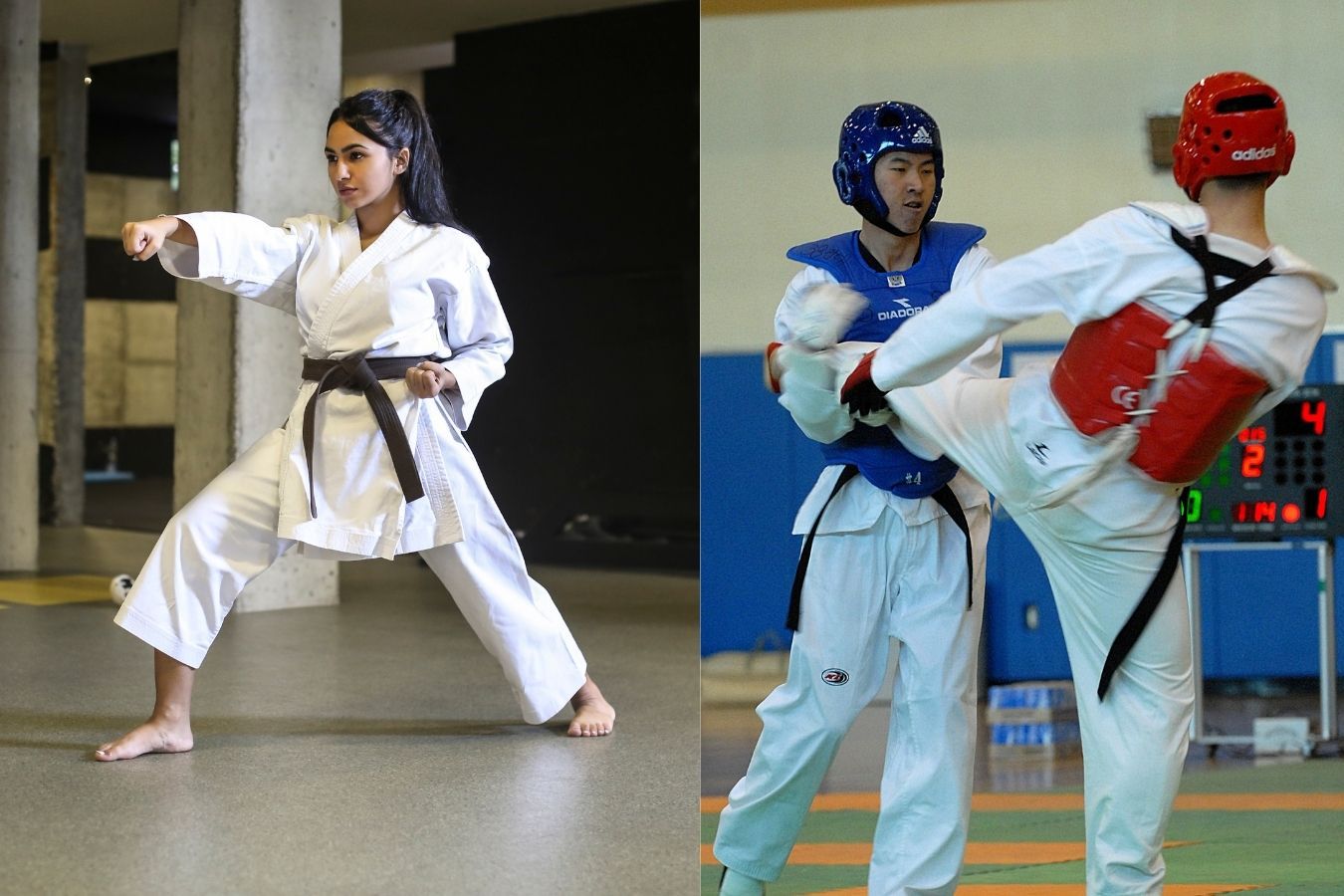
Martial arts aren’t just the gateway to physical fitness and self-defence, but also to cultural exploration and personal growth.
Among the plethora of styles practised around the globe, Karate and Taekwondo are easily two of the most prominent, each with its unique heritage, techniques, and philosophies. While both have earned their stripes on the Olympic stage, they offer distinct paths for practitioners.
Let's explore the key differences that set them apart.
Origins and Philosophies
Karate has its roots in Japan, with a history that stretches back 500 years to the Okinawa region.
It was born out of necessity when weapons were banned, leading to the development of an unarmed combat system. The term "Karate" translates to "empty hands," reflecting its focus on hand techniques.
Meanwhile, Taekwondo originates from Korea, with its earliest practices dating back to 50 B.C.E. The name itself, "Taekwondo," means "the way of foot and fist," which aptly summarises the emphasis on kicks and punches.
Taekwondo evolved under various influences, including during the Japanese occupation of Korea, which introduced elements of Japanese and Chinese martial arts.

Image Credits: Washington Post
Image Credits: Washington Post
Image Credits: Washington Post
Techniques and Training
The most notable difference between Karate and Taekwondo lies in their techniques.
Karate focuses on hand techniques, including punches and open-hand strikes, with kicks serving as supplementary moves. Practitioners learn to deliver powerful strikes with precision and efficiency. Karate training is comprehensive, involving kihon (basics), kata (forms), and kumite (sparring), each aspect honing different skills.
Taekwondo is renowned for its emphasis on kicking techniques. Practitioners learn a variety of kicks, including spinning and jumping kicks, leveraging the power and reach of the legs. Taekwondo training also includes forms (poomsae) and sparring but with a significant focus on agility, flexibility, and dynamic movements.
Here's a quick comparison:
Aspect | Karate | Taekwondo |
Focus | Hand techniques, punches, and open-hand strikes. Kicks are used but not as predominantly. | Kicking techniques, including spinning and jumping kicks. Uses hands for punches but emphasises kicks. |
Training Components | Kihon (basics), Kata (forms), and Kumite (sparring). | Poomsae (forms) and sparring, with a significant focus on dynamic kicking techniques. |
Physical Emphasis | Power, precision, and efficiency in strikes. | Agility, flexibility, and dynamic movements. |
Competition and Scoring
In competitive settings, both martial arts showcase their unique approaches.
Karate competitions award points for punches, kicks, and strikes, with emphasis on form, power, and control. Taekwondo competitions, however, favour kicks, especially those delivered to the head, reflecting the sport's kicking-centric nature.
Aspect | Karate | Taekwondo |
Scoring Focus | Points are awarded for punches, kicks, and strikes with emphasis on form, power, and control. | Points favour kicks, especially to the head, reflecting the sport's emphasis on kicking techniques. |
Competition | Both light contact and full contact styles, with specific rules for scoring based on technique and impact. | Olympic-style Taekwondo features electronic scoring systems for accuracy, with a high value placed on head kicks. |
Choosing Between Karate and Taekwondo
Your choice between Karate and Taekwondo should align with your personal interests, goals, and the type of physical activity you enjoy.
If you're drawn to a balanced approach with a focus on hand techniques and strategic combat, Karate might be your calling. Or, if dynamic, high-flying kicks and agility speak to you, Taekwondo could be the perfect fit.
Conclusion
Karate and Taekwondo, each with its storied past and distinctive approach, offer more than just a physical workout. They are conduits to learning about rich traditions and developing discipline, respect, and perseverance.
Whether you choose the path of "empty hands" or "the way of foot and fist," you embark on a journey of self-discovery and personal mastery.
Are there weapons in Taekwondo?
Traditional Taekwondo does not incorporate weapons training. It focuses on kicks, punches, and open-hand techniques.
Can you get knocked out in Taekwondo?
Yes, knockouts can occur in Taekwondo, especially from powerful kicks, underlining the sport's emphasis on striking techniques.
Can you wear a black Taekwondo uniform?
Black uniforms, or doboks, are typically reserved for instructors or specific schools, varying by the dojo's rules and traditions.
Is Taekwondo Korean karate?
Taekwondo is a Korean martial art distinct from karate, which originated in Japan, though both share some similarities in techniques and philosophy.
Is taekwondo harder than karate?
The difficulty is subjective and varies by individual. Taekwondo focuses more on high kicks and agility, while karate emphasises hand techniques and form.
For more guides and news on MMA, make sure to stay connected with Sportsboom.com.
Traditional Taekwondo does not incorporate weapons training. It focuses on kicks, punches, and open-hand techniques.
Traditional Taekwondo does not incorporate weapons training. It focuses on kicks, punches, and open-hand techniques.
Traditional Taekwondo does not incorporate weapons training. It focuses on kicks, punches, and open-hand techniques.
Can you get knocked out in Taekwondo?Yes, knockouts can occur in Taekwondo, especially from powerful kicks, underlining the sport's emphasis on striking techniques.
Yes, knockouts can occur in Taekwondo, especially from powerful kicks, underlining the sport's emphasis on striking techniques.
Yes, knockouts can occur in Taekwondo, especially from powerful kicks, underlining the sport's emphasis on striking techniques.
Can you wear a black Taekwondo uniform?Black uniforms, or doboks, are typically reserved for instructors or specific schools, varying by the dojo's rules and traditions.
Black uniforms, or doboks, are typically reserved for instructors or specific schools, varying by the dojo's rules and traditions.
Black uniforms, or doboks, are typically reserved for instructors or specific schools, varying by the dojo's rules and traditions.
Is Taekwondo Korean karate?Taekwondo is a Korean martial art distinct from karate, which originated in Japan, though both share some similarities in techniques and philosophy.
Taekwondo is a Korean martial art distinct from karate, which originated in Japan, though both share some similarities in techniques and philosophy.
Taekwondo is a Korean martial art distinct from karate, which originated in Japan, though both share some similarities in techniques and philosophy.
Is taekwondo harder than karate?The difficulty is subjective and varies by individual. Taekwondo focuses more on high kicks and agility, while karate emphasises hand techniques and form.
For more guides and news on MMA, make sure to stay connected with Sportsboom.com.
The difficulty is subjective and varies by individual. Taekwondo focuses more on high kicks and agility, while karate emphasises hand techniques and form.
For more guides and news on MMA, make sure to stay connected with Sportsboom.com.
The difficulty is subjective and varies by individual. Taekwondo focuses more on high kicks and agility, while karate emphasises hand techniques and form.
For more guides and news on MMA, make sure to stay connected with Sportsboom.com.
Related articles
What is a double fault in tennis?
For those of you who do not follow tennis keenly , and are interested in learning the nuances of the sport, one of the key rules you’ll need to know a
What is a walkover in tennis?
In general, a walkover means a situation where one participant or team wins because the other does not show up or is unable to compete. The term walko
Best Tennis Player of All Time: Ranked!
To rank the best tennis players of all time, we assigned scores based on a weighted evaluation of their key career milestones. Weightage Criteria : To
FAQs
- Where can I find more betting tips and predictions?
- Visit our Betting section and Predictions pages for the latest tips, odds, and analysis across sports.
- How do I bet responsibly?
- Set a budget, never chase losses, and take breaks. See our Responsible Gambling policy for full guidance.
- Where can I read more articles on this topic?
- Browse our Articles page or use the category links above to see all content in this section.