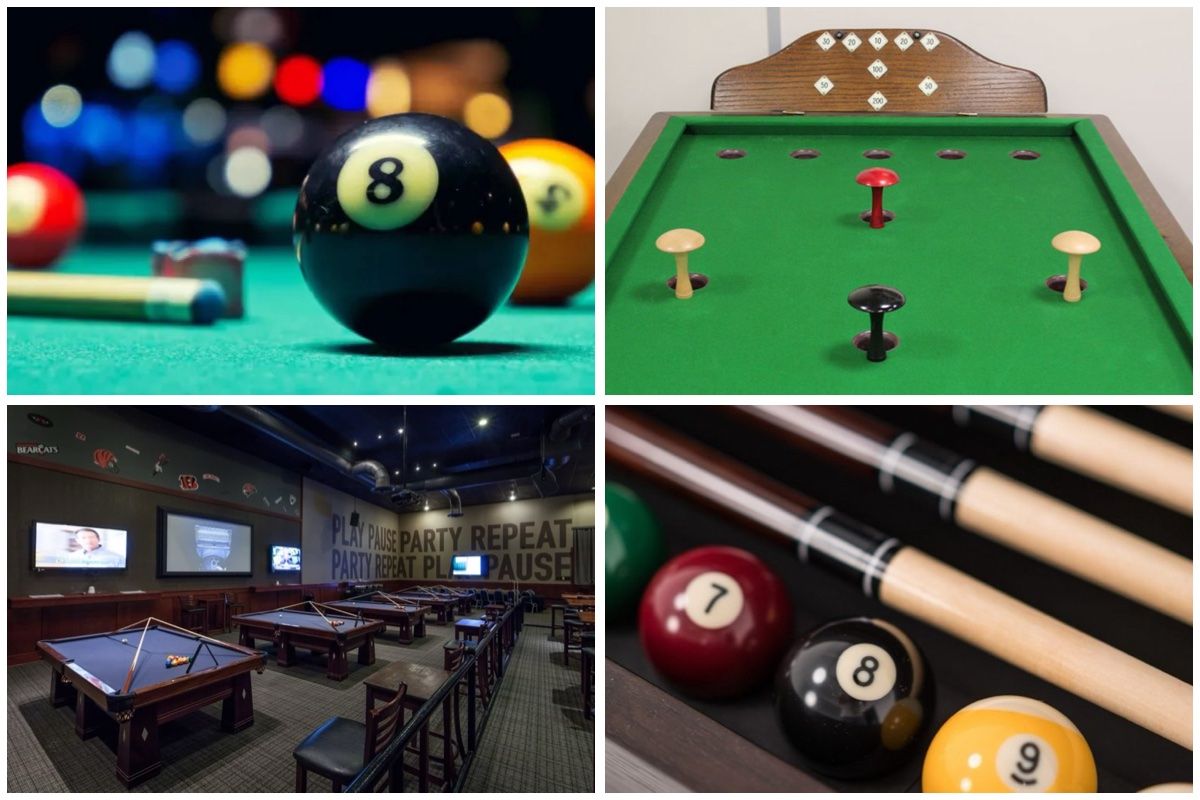
The games of billiards and pool often get intermingled in casual conversations due to their similarities, yet they possess distinct characteristics that set them apart in the realm of cue sports. While both are played on a table with cues and balls, their rules, equipment, and even historical origins differ significantly.
Even the history and legacy of table games has its snobbery and rivalries.
So let’s take a look at the differences between the games of billiards and pool to see what really sets them apart. 
The origins of billiards can be traced back to the 15th century in Europe, believed to have evolved from outdoor lawn games. Over time, it transitioned to indoor tables with pockets, giving rise to various versions, including carom billiards. Plus it was warm inside.
On the other hand, pool, in its contemporary form, emerged in the late 19th century in the United States as a variation of billiards. Pool might be newer, but that hasn’t stopped it from expanding thanks to popularity and pop culture.
Pool players think their game is better than billiards, and vice versa.
Wanna settle pool vs billiards? Do it on the tables.
One of the primary differences between billiards and pool lies in the tables used for each game. Billiards typically refers to carom billiards, played on a table without pockets, focusing on using the cue ball to strike the object balls and score points through caroms or cannons.
Pool is predominantly played on a six-pocketed table, or variations of the sort. The sizes of the tables and balls can also differ between various billiard and pool versions. And oh so many balls!
The bigger the table, and the appearance of caroms will let you know you’re at a billiards table, not a pool table.
The game-play mechanics diverge significantly in billiards vs pool. In billiards, players aim to strike both the opponent's cue ball and the object balls in a specific sequence, earning points through caroms, where the cue ball strikes two object balls consecutively. Carom billiards generally involves intricate strategies, emphasizing precision and ball control.
In contrast, pool encompasses various popular versions such as eight-ball, nine-ball, and snooker, each with its unique rules. Eight-ball, the most commonly played pool game, involves pocketing either solid or striped balls, followed by the black eight-ball to win. Nine-ball focuses on pocketing the balls in numerical order, with the nine-ball as the decisive winning shot. Snooker, another popular variant, uses 22 balls and demands precise cue ball control and strategic play.
It’s good to know which game you are playing before you grab a cue, or it could be a very short game for you. 
The scoring systems in billiards vs pool are fundamentally different. In billiards, points are earned through successful caroms or cannons, with players aiming for a predetermined target score.
The rules of pool you can't learn in school, maybe you can, the goal is primarily based on pocketing specific balls according to the game variant's rules, with each ball holding a designated value. Winning in pool often involves pocketing the final decisive ball, such as the eight-ball or nine-ball.
Again, if you don’t know how to win the game you’re playing, you might want to refresh before the break.
Both billiards and pool demand different skill sets and strategic approaches. Billiards emphasizes precise ball control, mastery of angles, and understanding the intricacies of rebound paths. It requires players to focus on manipulating the position of both the cue ball and object balls to execute precise shots and gain points through caroms.
Pool, on the other hand, requires strategic planning, shot-making abilities, and excellent cue ball control to navigate the table, pocket balls, and anticipate subsequent shots. Different variants of pool may emphasize different skills, such as pattern recognition in eight-ball or aggressive shot-making in nine-ball.
So while billiards and pool share certain similarities as cue sports played on tables with cues and balls, their differences in table structure, game-play mechanics, scoring systems, and required skill sets make them distinct entities within the world of indoor games. Understanding these differences adds depth and appreciation for the unique challenges and strategies inherent in both billiards and pool, enriching the experience for players and enthusiasts alike.
Start out easy and get a feel for the game, and of course know if you’re actually playing billiards or pool.
So if you need to ask what are the differences between billiards and pool, or anyone asks you, now you know. Screw you Alexa. 
Is pool he same as billiards?
-No. They are both table games, but the table, balls and rules are different.
Can I play pool on a billiards table?
-Not the real version. Yours would be make believe.
Is a pool table the same size as a billiards table?
-A billiards table is bigger than a pool table.
How many pockets are there on a billiards table?
-None.
Related articles
What is a double fault in tennis?
For those of you who do not follow tennis keenly , and are interested in learning the nuances of the sport, one of the key rules you’ll need to know a

What is a walkover in tennis?
In general, a walkover means a situation where one participant or team wins because the other does not show up or is unable to compete. The term walko

Best Tennis Player of All Time: Ranked!
To rank the best tennis players of all time, we assigned scores based on a weighted evaluation of their key career milestones. Weightage Criteria : To
FAQs
- Where can I find more betting tips and predictions?
- Visit our Betting section and Predictions pages for the latest tips, odds, and analysis across sports.
- How do I bet responsibly?
- Set a budget, never chase losses, and take breaks. See our Responsible Gambling policy for full guidance.
- Where can I read more articles on this topic?
- Browse our Articles page or use the category links above to see all content in this section.