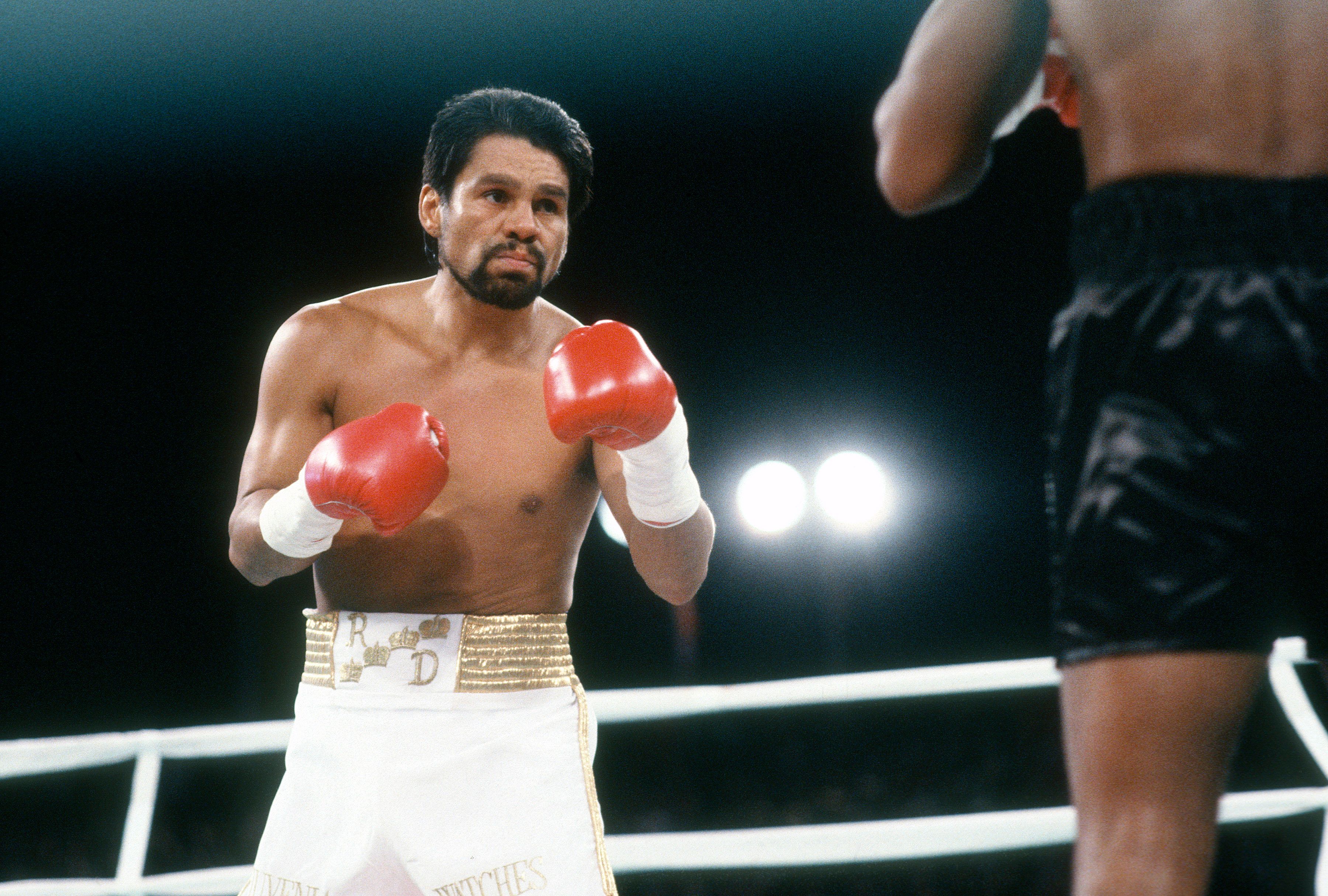
How Boxing is Scored Using the 10-point must system
A three-judge system is mandatory for championship fights, but smaller contests, such as four and six-rounders, are determined by the appointed referee in charge, but also some 10-round Area title fights are decided by the referee, too.
In either scenario, modern boxing is scored by what is known as the ‘10-Point Must System’, named so because each round is judged individually on a 10-point scale.
A typical round of boxing is scored 10-9, with the boxer determined to have won the round scoring 10 and the loser scoring 9.
Any boxer who is knocked down will lose a point, which could make the score for a round at 10-8. Multiple knockdowns can see the boxer being dropped lose even more points, such as 10-7 or 10-6.
However, if both fighters score a knockdown in the same round, then the deductions cancel each other out and the round would go back to being scored 10-9.
A 10-8 round can also be scored without a knockdown, if one boxer dominates the other so completely without much reply.
Boxers can be deducted points for fouls too, which could see a round scored at 10-8. Fouls could be anything from repeated low blows, intentional use of the head, excessive holding, hitting around the back of the head, hitting after the break, or even for just not listening to the referee’s instructions.
A 10-10 round is a possible score, in the case where the boxers just cannot be split apart, however, judges are widely encouraged to avoid this even scoring and to only award it in events where they truly believe nothing could separate the two opponents. Its mostly discouraged because it could be all too easy to score close rounds a draw, so judges are urged to pick a winner to make the final results conclusive.
Unanimous decision: When all three judges have scored the fight in favour of the same boxer. This is the most conclusive result.
Unanimous decision: When all three judges have scored the fight in favour of the same boxer. This is the most conclusive result.
Split decision: This result occurs when two judges score the fight in favour of Boxer 1, but the other remaining judge scores it for Boxer 2. Boxer 1 wins overall by two to one.
Split decision: This result occurs when two judges score the fight in favour of Boxer 1, but the other remaining judge scores it for Boxer 2. Boxer 1 wins overall by two to one.
Majority decision: This decision is slightly less close than a split, when two judges score the fight in favour of Boxer 1, but the other judge scores it as a draw. Boxer 1 still wins but it’s not unanimous. However, the losing boxer hasn’t won on any scorecard, so the winner is victorious quite conclusively.
Majority decision: This decision is slightly less close than a split, when two judges score the fight in favour of Boxer 1, but the other judge scores it as a draw. Boxer 1 still wins but it’s not unanimous. However, the losing boxer hasn’t won on any scorecard, so the winner is victorious quite conclusively.
Majority draw: This is the closest of all decisions, when two judges score the fight a draw, yet the one other judge favours Boxer 1, but doesn’t have enough to be declared the overall winner.
Majority draw: This is the closest of all decisions, when two judges score the fight a draw, yet the one other judge favours Boxer 1, but doesn’t have enough to be declared the overall winner.
Clean and Powerful Punches: The biggest decider to scoring a round is for the boxer which lands the cleanest punches. If both boxers land an equal amount of scoring shots, then the round will be favoured towards the one that scored the most powerful punches.
Clean and Powerful Punches: The biggest decider to scoring a round is for the boxer which lands the cleanest punches. If both boxers land an equal amount of scoring shots, then the round will be favoured towards the one that scored the most powerful punches.
Effective Aggression: The boxer that comes forward and shows the most effective aggression goes a long way to winning the round. The attacks and pressure must be successful, so just walking forward with no real result will not help to win the round.
Effective Aggression: The boxer that comes forward and shows the most effective aggression goes a long way to winning the round. The attacks and pressure must be successful, so just walking forward with no real result will not help to win the round.
Ring Generalship: This goes to the boxer that confidently commands the ring, controls the action and pace, appearing the more dominant and authoritative.
Ring Generalship: This goes to the boxer that confidently commands the ring, controls the action and pace, appearing the more dominant and authoritative.
Effective Defence: Despite being the opposite to the rest, effective defence is considered when scoring a round. If the boxers are landing equal punches but one is defending more successfully than the other, then they will be heavily favoured.
Effective Defence: Despite being the opposite to the rest, effective defence is considered when scoring a round. If the boxers are landing equal punches but one is defending more successfully than the other, then they will be heavily favoured.
Related articles
What is a double fault in tennis?
For those of you who do not follow tennis keenly , and are interested in learning the nuances of the sport, one of the key rules you’ll need to know a
What is a walkover in tennis?
In general, a walkover means a situation where one participant or team wins because the other does not show up or is unable to compete. The term walko

Best Tennis Player of All Time: Ranked!
To rank the best tennis players of all time, we assigned scores based on a weighted evaluation of their key career milestones. Weightage Criteria : To
FAQs
- Where can I find more betting tips and predictions?
- Visit our Betting section and Predictions pages for the latest tips, odds, and analysis across sports.
- How do I bet responsibly?
- Set a budget, never chase losses, and take breaks. See our Responsible Gambling policy for full guidance.
- Where can I read more articles on this topic?
- Browse our Articles page or use the category links above to see all content in this section.